The divine Raphael. Only Michelangelo and Leonardo da Vinci stand with him in the trinity of the Italian High Renaissance art. Through June 28, the Metropolitan Museum of Art in New York is hosting Raphael: Sublime Poetry, an exhibition of over 170 works by the master, many of them not seen in this country before. The show has drawn predictably huge crowds.
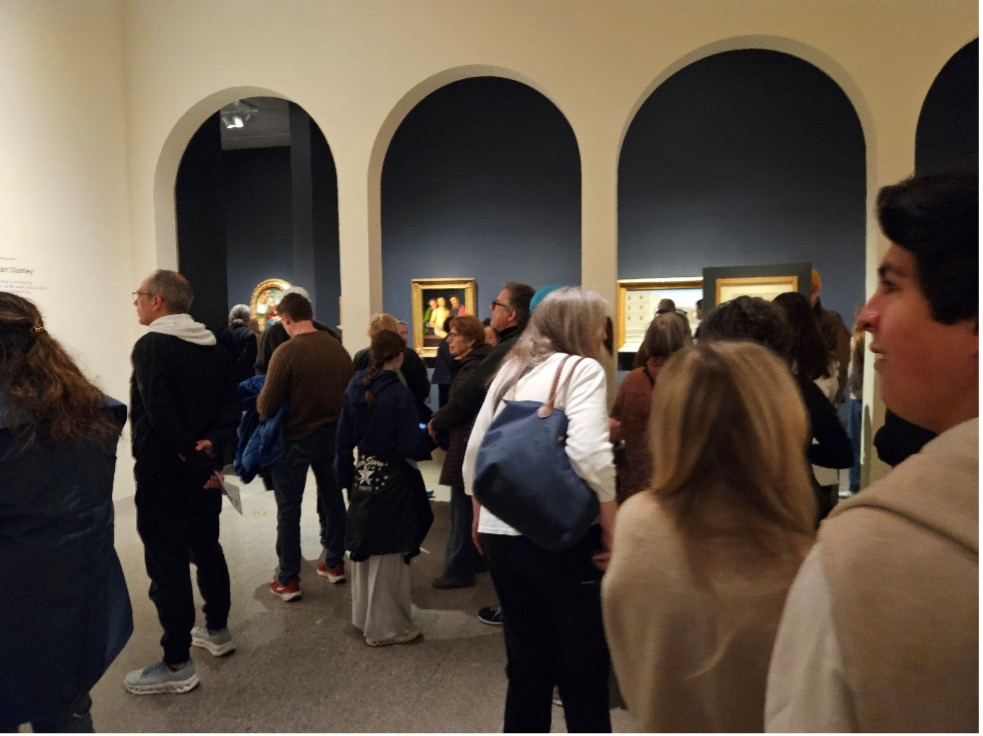
Photo by the author
I’ve written before about the challenges of blockbusters, and this show has those challenges aplenty. My advice, if you have the luxury of returning to the museum over the course of the show, is to enjoy a room or two of Raphael and then call it a day. No one, not even the most dedicated scholar, could possibly give the works the attention they deserve in one visit, particularly not a visit where you’re standing shoulder to shoulder.
In addition to scholarly wonks, the show was filled by the general public, many of them snapping selfies. It’s inevitable, and there’s really no stopping it, but to my mind it goes against the viewing opportunity, a situation summed up in a poem published in the latest issue of The Brazen Head by a museum-goer (me) with a rather jaundiced eye:
Selfies
The Louvre announced that it will build
a new extension made to house
the Mona Lisa only. This
should handle all the milling crowds
lifting their smartphones to attempt
a photo with the famous face.
The Prado and the Vatican,
and any other well-known place
are filled today with tourists taking
selfies with a culture’s flower
as if a feigned proximity
could somehow let them share its power.
Expect to find them on return
scrolling though photographs to see
not art by Michelangelo,
but Michelangelo and me!
Perhaps a moving sidewalk is
on order for the Louvre to speed
the crowds efficiently along
while meeting this insistent need.
So they will stand, facing away,
lost in themselves. All they will save
are images unreal as shadows
on the back wall of Plato’s cave.
* * *
I always enjoy attending receptions, dinners, and other events sponsored by the Appraisers Association of America, and the recent Annual Luncheon was no exception. I found myself seated next to Richard Cervantes, a Senior Vice President at Doyle Auction Gallery. We’ve both been in the art world a long time, and we found ourselves chuckling over reminiscences of the days when country auctions were a contact sport – rug dealers would switch the lot tags on carpets, painting dealers would hide paintings behind furniture being offered so that other dealers wouldn’t have the chance to examine the works before they came up for sale, dealers of all stripes would band together in illegal pools to keep bids low, fist fights occasionally broke out in parking lots, and (my favorite memory, from back in the days before cell phones) someone once cut the land line to a motel where an auction was being held to eliminate phone bids on a lot he wanted. (Did I mention that country auctions are no fun anymore?)
Richard wears two hats at Doyle – he is also the head of Asian art. I took the opportunity to question him on the current state of the market. There is a sizable contingent of younger collectors who are interested in older Chinese art, Richard told me, and it is their taste that drives the market today. I was surprised to learn, for example, that Tang Dynasty ceramic horses are out of favor with Chinese collectors.
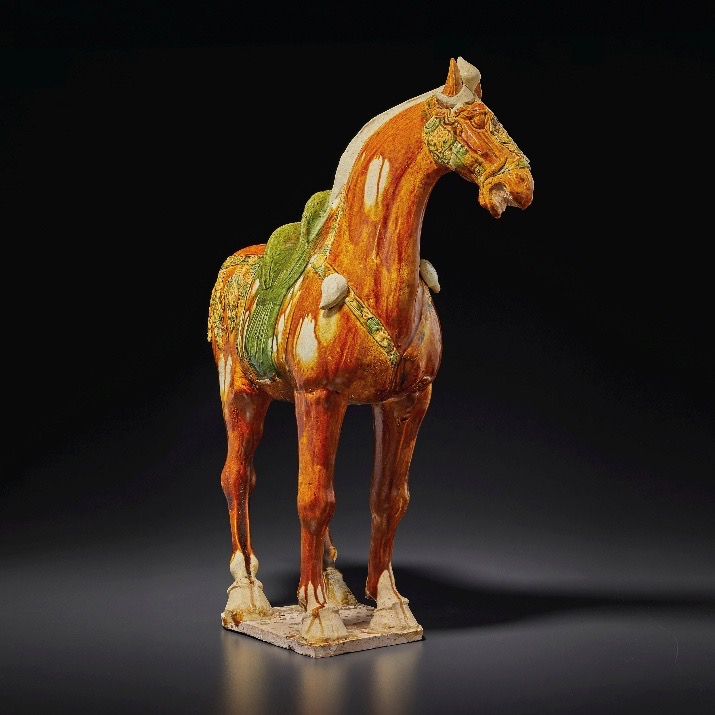
Ceramic Horse, Tang Dynasty, 613-907 CE. Photo courtesy of Christie’s.
Such horses were buried over a thousand years ago in the tombs of the wealthy. They were not traditionally collected by Chinese collectors, the reason being that having objects associated with tombs and death can bring bad Feng Shui into the home. Western collectors have no such fears, but the combination of a narrower collecting base and an increasing supply due to the fact that tombs are constantly being discovered during modern construction projects means that the market is soft
What younger Chinese collectors really want today, according to Richard, are classic porcelain works from the past thousand years. Such works were in demand in China up to the mid-20th century, but many works were destroyed in the notorious “Cultural Revolution” 60 to 70 years ago when Mao’s Red Guards tried to eliminate what they saw as vestiges of China’s corrupt, pre-communist past. Works that were in European and American collections during that rampage survived, of course, and now the Chinese are eager to have them back.
Their Western provenance, oddly, makes these works especially desirable to the Chinese. Fakes have always been part of the Asian market, but fakers today are trying to forge a Western provenance for their wares, going so far as to counterfeit sales invoices from noted New York or London dealers of a hundred years ago. The small stickers bearing the dealer’s name that are often affixed to the underside of works are in danger today of being peeled off by forgers visiting a legitimate gallery. One London dealer told Richard that a stolen sticker from him can go for a thousand dollars in Hong Kong, where it will be attached to a forgery being sold for a premium price.
Beauty, greed, and ingenuity. You can’t judge a book by its cover, and you shouldn’t judge a Chinese ceramic by its sticker. Buy from a reputable dealer.